Top Appointment Cancellation Mistakes That Cost You Customers


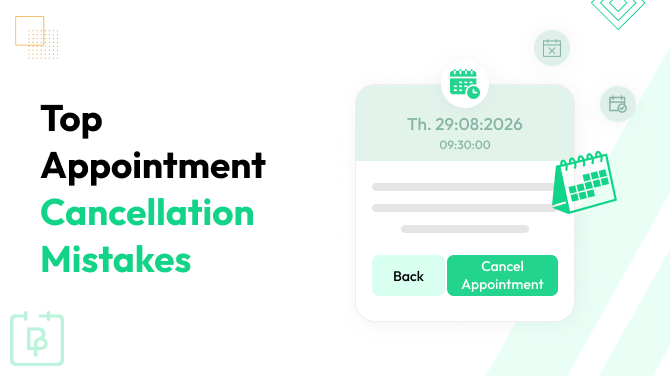
Most businesses don’t realise it, but appointment cancellation mistakes are quietly costing them customers every single day. Missed reminders, unclear policies, and poor booking experiences don’t just lead to appointment cancellations. They break trust and lower repeat bookings.
What looks like a small scheduling issue mostly turns into a serious revenue leak.
The real problem? These aren’t big failures. They’re small, yet overlooked mistakes that snowball over time. The good news is, they’re completely fixable!
After analyzing common appointment scheduling problems across service businesses, we’ve noticed patterns that are clear and strikingly similar. In this article, you’ll learn the top appointment cancellation mistakes that drive customers away. Plus learn exactly how to fix them before they impact your growth.
TL;DR. Most appointment cancellations happen due to poor systems, not customers. Fix issues like missing reminders, unclear policies, and weak booking experiences using the C.A.R.E. framework to reduce no-shows, improve retention, and increase revenue.
Why Customers Cancel Appointments

We know the feeling, that frustration when a customer cancels an appointment. Or worse, they just don’t show up. It ruins your day’s schedule and hits your wallet.
But while some cancellations are unavoidable, many happen because of simple yet preventable reasons. Even the statistics reveal that 60% to 85% of customer churn is preventable.
Why Customers Actually Cancel
Customers cancel appointments mainly due to a lack of reminders, low perceived value, scheduling conflicts, poor booking experiences, or weak customer connection.
- They honestly forgot: Life is chaotic. So, if an appointment was booked weeks ago, and they don’t get a reminder, it simply slips off their mind.
- Unexpected Life Curveballs: A sick child, a last-minute work meeting or a traffic jam happens. They aren’t trying to be rude; they are just overwhelmed – so you’re clear here!
- Low Priority/Value: If they don’t see the appointment as important, they will cancel it for something more enjoyable or urgent, like a “better offer” from another competitor.
- Lack of Connection: If they don’t know you well or feel like just another number, they feel less guilty about cancelling.
- Confusing Booking System: If it is hard to book, they will be looking for a business that makes it easier.
What Most Businesses Get Wrong
Most businesses simply just assume cancellations are random or customer-driven.
However, in reality, they’re mostly the result of poor systems and overlooked appointment scheduling problems:
- No structured communication.
- No friction, lowering booking flow.
- No strategy to reinforce commitment.
Instead of asking “Why are customers cancelling?”, the better question is:
“Where is the booking experience breaking?”
Because once you fix the system, appointment cancellations drop naturally.
The Hidden Cost of Appointment Cancellations (Most Businesses Ignore This)

Appointment cancellations are a direct hit to your revenue, efficiency and long-term growth.
Most businesses track how many bookings they get. Very few track how much they lose from cancellations. And that’s where the real problem starts.
Every appointment cancellation creates silent revenue leakage. If even 10% of your weekly bookings cancel, the numbers add up real fast, and you can even think about what’s happening.
Let’s say you manage 100 appointments per week at ₹1,000 per booking. Thus, a 10% cancellation rate means ₹10,000 lost weekly and ₹40,000+ per month without any visible warning sign.
But the financial loss doesn’t stop there.
- Wasted staff time: Empty slots mean your team is still on payroll but not generating revenue.
- Lower operational efficiency: Gaps in schedules disrupt the complete schedule and workflows of the day, and also lower daily output.
- Missed rebooking opportunities: Many cancelled appointments never get rescheduled.
Over time, this directly impacts your customer lifetime value.
A customer who cancels once without re-engagement is far less likely to return. Multiply that across dozens of cancellations, and you’re not just losing one booking: You’re losing repeat business, referral and long-term revenue.
Top Appointment Cancellation Mistakes That Drive Customers Away
1. No Automated Reminder System
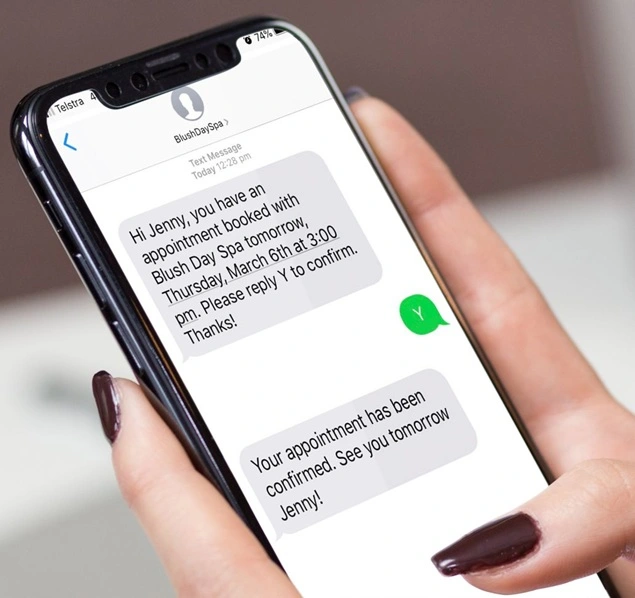
One of the most common appointment cancellation mistakes is relying on customers to remember their bookings. Because in our fast-paced world, people get overwhelmed really quickly and end up forgetting a lot of things. Your appointment is simply one of them.
When your business relies on manual reminders, or worse, no reminders at all, you’re setting yourself up for high no-show rates.
Thus, the issue isn’t customer intent. It’s a lack of reinforcement from your side.
- Low recall rate: Bookings made days in advance are easily forgotten.
- No commitment trigger: Without reminders, the appointment feels less important.
- Higher no-show probability: Especially for first-time customers.
- Zero re-engagement opportunity: No reminder means no chance to prompt confirmation or rescheduling.
From our perspective, reminders act as a commitment anchor. They bring the appointment back into the customer’s attention and increase the likelihood of follow-through.
However, most service businesses either skip this step or rely on manual reminders, which are inconsistent and not scalable.
What works instead is a structured reminder system.
- Send confirmation right away after booking.
- Follow up with reminders 24 hours and 1 to 2 hours before the appointment.
- Use multi-channel communication (Email + SMS) for higher visibility.
- Include clear options to confirm, reschedule, or cancel.
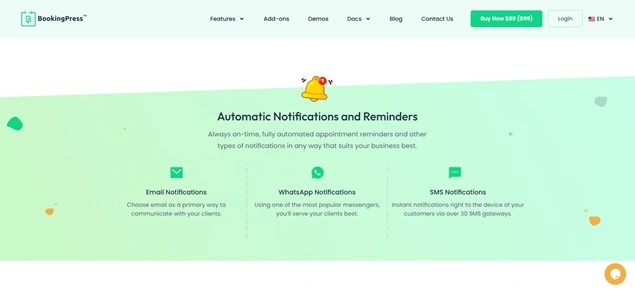
The best part? If you’re on WordPress (or planning to be), BookingPress is an all-in-one WordPress appointment booking solution. This WordPress appointment plugin allows you to accept endless online appointments, and send automatic notifications via:
- Email.
- SMS.
- WhatsApp.
- Telegram.
This improves your overall booking reliability.
In most cases, fixing this single appointment scheduling problem can cut down no-shows and last-minute cancellations up to 25% to 50%.
2. Making Cancellations Too Easy
One-click cancel = zero commitment.
This is one of the most controversial strategies in service businesses. The idea behind “one-click cancel” is client convenience, but in practice and reality, it mostly removes any psychological barrier to cancelling.
When cancelling an appointment takes less effort than keeping it, customers default to the easiest option.
- No friction = no hesitation: A single tap makes cancelling impulsive.
- No accountability: Customers don’t reconsider or evaluate the impact.
- Higher last-minute cancellations: Especially when plans change slightly.
- Lower perceived value: Easy to cancel = easy to ignore.
We’ve been working closely with many service-based businesses for over a decade, thus we can tell that commitment to appointments increases when there’s a small amount of effort or consequence involved for clients. And removing all friction breaks that commitment loop.
However, making cancellations difficult isn’t the solution either. That creates frustration and damages user experience.
The real mistake is a lack of balance. Thus, what works is flexibility with control. Sounds confusing? No problem. Take a look below to understand what you should do to fix it:
- Require a quick confirmation step before cancellation.
- Clearly show any impact (fees, cancellation policy or slot loss).
- Promote rescheduling as the easier alternative.
The goal isn’t to block cancellations. It’s to make customers pause and reconsider.
Because when cancelling becomes effortless, so does walking away from your service completely.
In simple words, the problem isn’t cancellation itself. It’s just how quickly and mindlessly it can happen.
3. No Clear Cancellation Policy
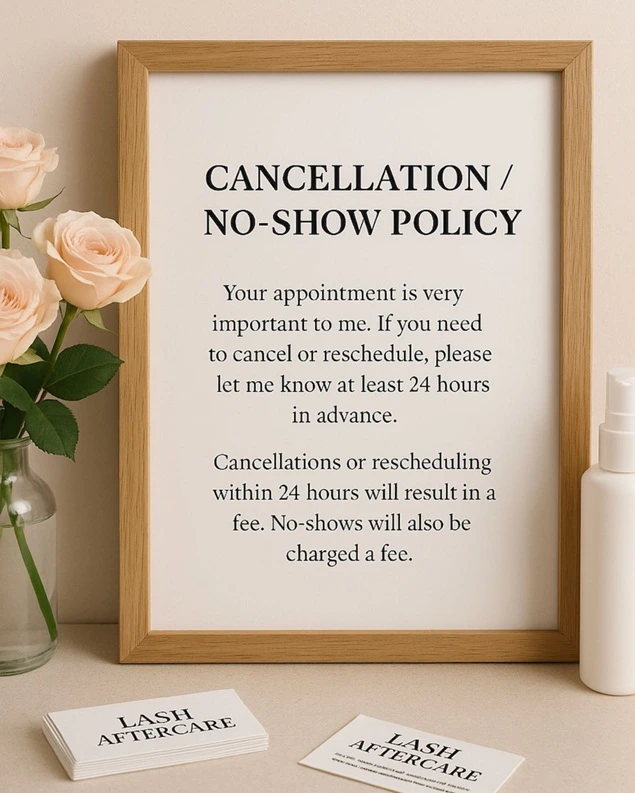
Even if your cancellation flow is designed well, it won’t matter if customers don’t understand the rules.
Unclear rules lead to unpredictable behaviour.
When customers don’t know when or how they can cancel an appointment, they simply go to what’s most convenient for them: last-minute cancellations or no shows.
This is one of the most overlooked appointment cancellation mistakes. Yet it impacts commitment and accountability directly.
- No deadlines: Customers think they can cancel anytime
- No consequences: Zero clarity on fees or restrictions lowers the seriousness
- Inconsistent handling: Different customers receive different responses
- Higher disputes and confusion: Especially around refunds or rescheduling
Clarity creates commitment. And when expectations are clearly communicated ahead of time, customers are more likely to follow through or take timely action.
With no proper cancellation policy and rules, your booking system sends the wrong signal: this appointment isn’t a priority. So, you must:
- Set clear cancellation windows. (12 or 24 hours prior)
- Communicate policies during booking, not after.
- Highlight consequences (fees, non-refundable deposits or slot forfeiture).
- Keep the policy simple, visible and easy to understand.
Because when there are no rules, cancellations feel consequence-free. And that’s exactly what drives them up.
However, we’re forgetting one more thing to add is grace period. If any customer books the wrong service or books an appointment by mistake, be polite and allow them to cancel within a defined time frame (e.g., 24 hours after booking) with no charges applied.
4. Poor Booking Experience (Slow, Confusing or Manual)

A complicated booking process lowers commitment before the appointment even begins.
Think of it this way: When a customer tries to book an appointment, they’re excited or need your service urgently. And if the booking process is slow, confusing, or feels like a manual chore, customers simply lose confidence in your brand.
Now, even if they booked under these conditions by chance, there’s a close-to-zero possibility that they’ll show up.
This is a core appointment scheduling problem: Friction during booking leads to weak intent.
- Too many steps: Long booking forms or multiple pages simply lead to drop-offs.
- Slow or manual confirmations: “Is my booking confirmed?”is the most common question. If a customer booked, but not sure nor confirmed, they’ll simply not come.
- Unclear availability: Confusing time slots or service details lowers trust.
- No instant feedback: Lack of confirmation weakens psychological commitment.
A smooth booking experience builds momentum. A broken one creates doubt.
So, what works best here instead is a fast & frictionless booking system like BookingPress.
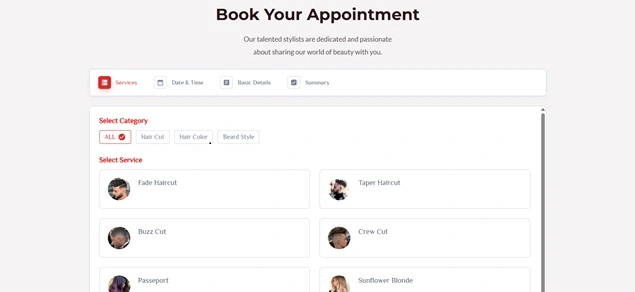
With BookingPress, you get a fully customizable booking form with extensive styling options. Furthermore, you get:
- One page or minimal step booking flow.
- Real-time availability calendar with clear time slots.
- Instant confirmation at the end of the booking process + confirmation notification.
- Mobile-friendly interface.
The easier it is to book, the stronger the commitment to show up.
5. No Rescheduling Option (Critical Mistake)
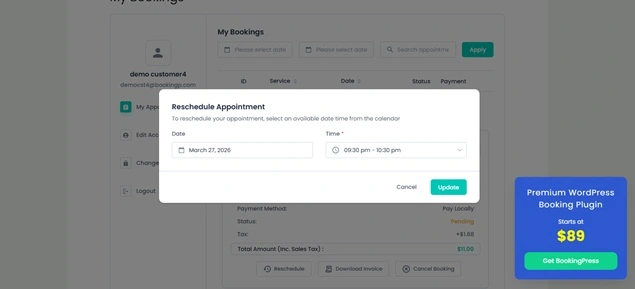
When customers can’t reschedule, they cancel.
Schedules change, and that’s normal. But if your booking system only offers a “cancel” option with no easy way to adjust the timing, you force customers into a decision that benefits neither side.
- No flexibility: Customers cancel even if they still want the service
- Lost revenue opportunities: Cancelled appointments don’t convert into future bookings
- Frustration: Customers feel restricted and may not return
- Higher churn: One cancellation mostly becomes a lost customer
From a decision-making perspective, rescheduling keeps intent alive. Cancellation kills it.
The solution is to make rescheduling easier than cancelling. BookingPress is one of the few best WordPress booking systems that:
- Offers a “Reschedule” option alongside cancel.
- Allows quick date/time changes without rebooking from scratch.
- Show available alternative slots right away.
- Reinforce rescheduling in reminders (“Can’t make it? Reschedule here”).
This simple shift can lower the appointment cancellation rate by 40% to 60% and boost retention, because you’re not losing the customer, just adjusting the timing.
6. Overbooking or Poor Time Management

Overbooking and Poor Time Management are two of the biggest reasons appointments get cancelled.
If you still don’t get it, no problem. Here, take a look at both:
Overbooking (The “Too Many Cooks” Scenario)
It is when you schedule more people than you have time or space for.
For example, booking two people for the 10:00 AM spa section. The reason why many service businesses do it is that they think, “Someone probably won’t show up anyway”. But when everyone shows up, the schedule turns upside down.
To fix this kind of chaos, most service businesses bump (Cancel or request to reschedule) the last person. Or in the worst case, they make them wait so long that the customer cancels themselves out of frustration.
Poor Time Management (The “Domino Effect”)
It happens when you don’t leave enough space between appointments, overrunning or getting started late.
This is one of the most common appointment cancellation mistakes we’ve seen service-based businesses make. Let’s say if a 9:00 AM appointment runs late, the 10:00 AM appointment starts late. By 2:00 PM, the whole day is behind.
Now, a customer who has been waiting for an hour will get fed up and leave.
In short, this is a vicious cycle:
- Poor management leads to long waits → customers get annoyed → they cancel the appointment.
- Now to compensate, the business overbooks → Makes the waiting even longer → leads to more appointment cancellations.
From a customer’s perspective, time is the product. If your schedule feels unreliable, the perceived value drops.
Thus, what works best is controlled scheduling:
- Avoid stacking appointments without buffer time.
- Set realistic service durations based on actual delivery time.
- Sync calendars to avoid double bookings.
- Monitor peak hours and adjust availability strategically.
Efficient time management doesn’t just improve operations, it increases customer commitment to show up.
7. No Follow-Up After Cancellation

A cancelled appointment doesn’t have to mean a lost customer, but without follow-up, it mostly does.
Most service businesses treat cancellations as an endpoint, yet in reality, it’s a critical re-engagement opportunity.
Ignoring this step is one of the most costly appointment cancellation mistakes.
- Lost recovery opportunity: No attempt to bring the customer back.
- Lower lifetime value: One cancellation turns into permanent churn.
- Weak customer relationship: No communication after cancellation lowers trust
- Missed feedback insights: You lose the chance to understand why they cancelled.
From a retention standpoint, follow-up keeps the connection alive.
The solution? A simple, timely re-engagement:
- Send a personalized follow-up message after cancellation to show you care.
- Offer an easy rescheduling link.
- Give a small incentive (discount, priority slot, and so on).
- Ask for quick feedback to understand issues, and never justify yourself or blame the client for cancellation.
Even a single follow-up can recover around two-thirds, roughly 66% of cancelled bookings. Because the difference between a cancelled appointment and a lost customer always comes down to what you do next.
The C.A.R.E. Framework: A Proven System to Avoid Appointment Cancellations Mistakes
The C.A.R.E. framework is a simple system to lower appointment cancellations by combining automatic reminders, clear cancellation policies, friction control and customer engagement.
It focuses on fixing both customer behaviour and booking system gaps, so appointment cancellation mistakes decrease naturally over time.
- C – Confirm
- Automated reminders + confirmations
- A – Assure
- Clear policies + expectations
- R – Reduce Friction
- Seamless booking + rescheduling
- E – Engage
- Follow-ups + retention strategy
| Element | What It Means | Why It Matters |
| C – Confirm | Automated reminders and instant confirmations. | Avoids missed appointments caused by forgetfulness. |
| A – Assure | Clear cancellation policies and expectations. | Builds accountability and lowers last-minute cancellations. |
| R – Reduce Friction | Smooth booking flow and easy rescheduling. | Removes barriers that lead to unnecessary cancellations. |
| E – Engage | Follow-ups and relationship building after the appointment. | Increases commitment and drives repeat bookings. |
Most appointment scheduling problems happen due to gaps in communication, clarity or experience.
The C.A.R.E. framework systematically closes those gaps:
- Reinforces commitment. (Confirm)
- Builds accountability. (Assure)
- Lowers friction. (Reduce)
- Recovers lost opportunities.(Engage)
Rather than reacting to the increasing appointment cancellation rate, you prevent appointments from getting cancelled using this strategic framework.
Final Word
There are several reasons why an appointment gets cancelled.
No automated reminders, no clear cancellation policy, no rescheduling option, and no proper follow-ups are the top appointment cancellation mistakes that cost you, high-paying customers.
The solution? A reliable online booking system that takes over all these drawbacks. One of the few outstanding solutions to make your online appointment booking process smooth and lower appointment cancellations is BookingPress.
This WordPress appointment plugin comes loaded with over 60+ premium addons, including 20+ payment gateways, a custom booking form, two-way sync calendars, automatic notifications, and a lot more!
Finished this? Dive into more content here.



Brian is a WordPress expert with a decade of developing experience & technical-writing. He enjoys blogging, movies & hiking.

Get BookingPress Premium
60+ Premium Addons
20+ Payment Gateways
Plan starts at just $89
Get Premium NowLike our insights? Click the badge to add BookingPress as your preferred source on Google.

Add as a Preferred
Source on Google