Service efficiency is a mix of staff productivity and customer experience. Even if you think you’ve already tried everything to improve staff efficiency, trust us, the modern world offers many more things to experiment with.
In this blog, we’ve collected a few practical ways to help your employees convert their time, skills, and resources into better outcomes for your clients and business.
TL;DR. To improve staff efficiency, reduce admin work with automation, delegate non-core tasks, standardize service times, prepare clients in advance, and train staff to handle multiple roles efficiently.
Improve staff productivity with better output within the same time

In the service industry, you always want more done in the same amount of time without cutting corners on quality. When you implement better productivity, you can expect:
- An increase in the number of customers served per hour.
- Better average handling time (AHT) in support.
- More room cleanings per shift (e.g., hotels).
For example, in service industries like salons and spas, the goal is to maximize booked, billable time, leaving non-working and admin time no chance.
You might need to upskill staff so that faster execution can be achieved. For example, train assistants things like:
- Exact timing for each task (e.g., wash = 7-10 min)
- Product usage standards
- Setup/reset checklist
- Adjust scheduling to support delegation
- Book specialists back-to-back
- Insert assistant-supported prep time before each slot
- Avoid giving specialists “dead time” for basic tasks.
But the best way is to combine upskill courses, smart scheduling software, and motivational boosters for staff.
Reduce error rates

Staff efficiency is also characterized by accuracy, consistency, and completeness of service. “If productivity is about staff working fast, quality is about getting it right for the first time.”
Among other things, it’s also traditionally measured with error rates, first-contact resolution, and customer complaints.
With modern staff scheduling software, you have many chances to improve staff efficiency:
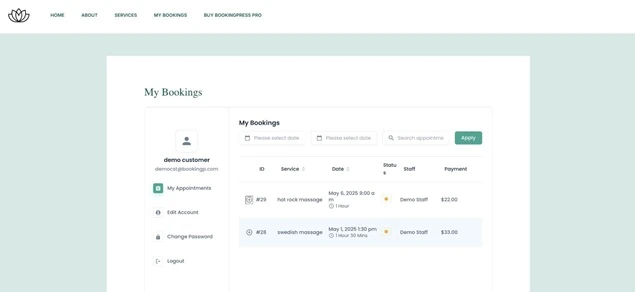
- Use scheduling tools like BookingPress to register clients and minimize manual admin time.
- Optimize scheduling by reducing gaps between appointments and use smart time slots.
- Standardize service durations so that there are clear time limits for each treatment and delays or errors.
Speed up pre-appointment preparations

With or without software, it’s important to reduce time on pre-appointment preps so that everyone’s energy is saved for serving at appointments and providing high-quality services. Client forms and preferences collected in advance are a huge time saver.
For example, a massage therapist who already knows a client’s pressure preferences and problem areas can start the session right away instead of spending the first 10 minutes asking questions. Any extra information can be collected at checkout using extra fields when a client books an appointment (or is asked by the phone by the admin). The key idea is that the right questions should be asked before the appointment/meeting. BookingPress supports that.
Small bits of prep done ahead of time make each appointment smoother and more valuable for both sides.
Use assistants (delegate prep/cleanup so specialists focus on core services)

Parallel processing shortens total appointment duration, so assistants can be a great help for specialists serving more clients. How is this practically implemented in modern environments? Let’s illustrate it with the salon workflow example.
1. Break each service into steps
Map out what actually requires a specialist vs. what doesn’t. For instance, for a hair appointment:
Assistant:
- checkout prep
- washing, conditioning
- towel drying, detangling
- cleaning tools, resetting station
Specialist:
- cutting, coloring, styling decisions
Thus, you’re separating skill-based work from routine tasks
2. Create “parallel workflow”
If your business is suffering from idle gaps between appointments, you may try overlapping staff:
- While Stylist A is cutting Client 1
- Assistant washes Client 2
- The next client is ready immediately after.
3. Introduce service staging
If you want clients to move smoothly without waiting for the same person, implement a sort of mini production line:
- Stage 1: Prep (assistant)
- Stage 2: Core service (specialist)
- Stage 3: Finish/reset (assistant)
Offer online bookings
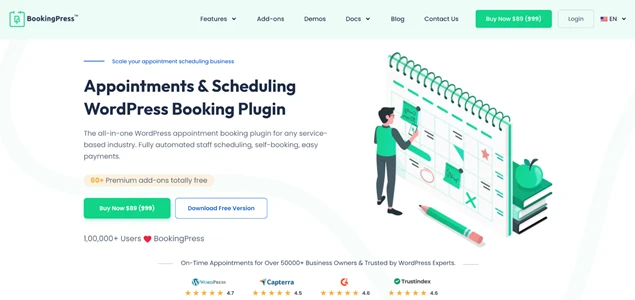
If your service business deals with meetings, appointments or lessons, you can use plugins like BookingPress to accept self-bookings and free up a lot of time that you normally use for notifications, payments, and communication. There are tons of benefits for employee efficiency:
Online scheduling (24/7 bookings)
Clients book appointments themselves without staff involvement, all data in real time, so there is no double booking fear.
Staff accounts
Each staff member has their own schedule, services, and availability in a personal account. Bookings are automatically assigned based on rules and full autonomy is guaranteed.
Calendar integrations (Google / Outlook sync)
Two-way sync with the personal calendars of your staff keeps availability always updated and sends instant notifications to personal calendars.
Automated email & SMS notifications
Instant booking confirmations, reminders before appointments, follow-ups after service – the whole cycle is optimized to reduce no-shows.
Workflow automation (end-to-end)
Bookings, confirmations, reminders, services follow-ups, payments, deposits, and cancellations all automated without staff effort. Staff doesn’t have even a minimum admin burden.
Bundle services to increase revenue per time slot
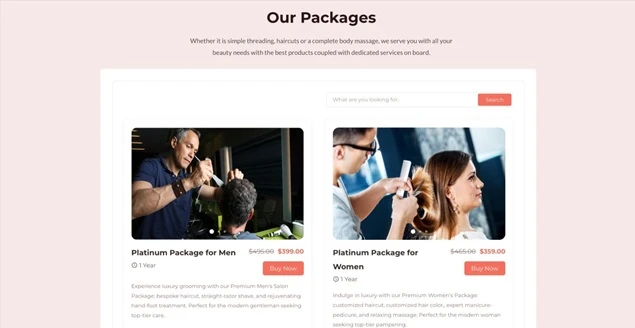
Bundling services (combining multiple treatments into one offer) helps you reduce wasted time and improve staff efficiency. It’s basically packaging many small, fragmented tasks into fewer high-value sessions. How does it work – exactly?
- Higher revenue per time slot (a 90-minute bundle generates more revenue than separate 2-3 bookings).
- Less fragmentation in the calendar and more predictable schedules for staff.
- Opportunity for parallel work for teams.
- Lower no-show impact.
Overall, you can better utilize staff in many areas and workflows (bundles work pretty well for BookingPress clients).
Examples across service industries:
- Salons: haircut + coloring + treatment package
- Spas: massage + facial + sauna session
- Fitness trainers: session + assessment + nutrition consult
- Clinics: consultation + procedure + follow-up
- Cleaning services: full-home package vs single-room visits.
Improve flexibility and adaptability for staff
Managing peak hours and dealing with complex customer needs are important for staff efficiency in the service business.
A practical, high-impact way to improve flexibility and adaptability is to…
1. Cross-train staff on multiple services.
2. Create tiered skill levels (junior, senior, etc.).
3. Use flexible shift blocks instead of fixed schedules.
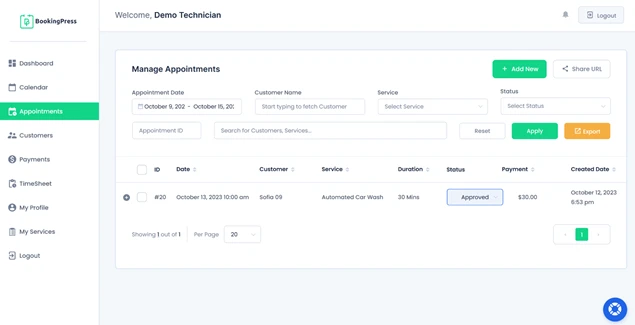
4. Enable real-time schedule adjustments (use BookingPress to reassign bookings, adjust availability instantly, and fill gaps quickly).
5. Have part-time or floating staff during peak hours.
Boost customer satisfaction
True staff efficiency includes positive customer outcomes, not just speed or qualification of your staff. In the service areas, work on your metrics like:
- CSAT (Customer Satisfaction Score)
- NPS (Net Promoter Score)
- Reviews and ratings
In general, the list of things you can do is pretty common and can be tailored to your specific industry and location:
- Reduce errors and mistakes.
- Personalize experience for clients (tailor recommendations and services to individual needs or provide accounts with past bookings).
- Provide speed and convenience with online booking, self-service options, and timely service.
- Handle complaints or issues quickly.
- Ensure clean, comfortable, and well-organized spaces.
- Use surveys, reviews, or in-person feedback to identify pain points.
Reduces stress or dissatisfaction for staff

Staff motivation is one thing you should not underestimate, and it’s tightly connected with satisfaction with everyday work. What can you do?
- Provide regular performance feedback
- Praise excellent service publicly
- Offer small perks for meeting targets (bonuses, gift cards, extra time off)
- Let staff make decisions within their role (service customization, shift change, minor problem-solving)
- Offer performance-based bonuses or commissions.
Conclusion: How to Improve Staff Efficiency in the Service Industry?
To improve the way your staff performs, service industries should take many aspects into account, including:
- General productivity (output vs time)
- Service quality
- Customer and staff satisfaction
- Time management and responsiveness
- Standardization
- Flexibility and adaptability
To simplify that categorization, staff efficiency can be put into a simple formula: (Quality Service Output) / (Time + Cost + Resources Used). Needless to say, it’s going to be very different based on your location and workflow. Rules, scheduling software, and quality assurance help you achieve your goals with a smart plan.
You May Also Like:
- Top Shift Management Best Practices for Modern Businesses
- The Do’s and Don’ts of Cancelling Appointments Professionally
- How to Manage Multi-Branch Scheduling With BookingPress
Frequently Asked Questions About Improving Staff Efficiency
Staff efficiency in the service industry is measured by how effectively employees deliver high-quality services using the least amount of time, cost, and resources. It combines productivity, service quality, customer satisfaction, and time management. Efficient staff complete more tasks accurately while maintaining a positive customer experience.
Optimized scheduling improves staff efficiency by reducing idle gaps between appointments and ensuring specialists spend more time on billable tasks. Using scheduling software, standardized service durations, and smart time slots helps businesses maximize working hours and minimize delays or overlaps.
Delegation allows specialists to focus on core services while assistants handle preparation, cleanup, and routine tasks. This parallel workflow reduces total service time, improves productivity, and allows businesses to serve more clients without increasing staff workload.
Online booking systems reduce manual administrative tasks such as scheduling appointments, sending reminders, and processing payments. Automation ensures fewer errors, reduces no-shows with reminders, and allows staff to focus more on delivering services instead of managing bookings.
Reducing errors involves standardizing service durations, collecting client information in advance, using scheduling tools, and providing regular staff training. Clear workflows and preparation checklists help ensure tasks are completed consistently and correctly the first time.

 14-day money-back guarantee