

Generous discounts are not the only thing that makes your customers happy and willing to come back. In practice, you need to implement many technical aspects, understand the role of staff training, and do marketing calculations on a regular basis.
Want to know how? We’re exploring many practical ways to keep customers satisfied and coming back for more. Join us!
TL;DR. Keeping customers coming back isn’t about discounts alone. Focus on creating memorable service moments, reducing waiting frustration, using smart booking tools, training staff, and tracking retention metrics like repeat bookings and churn rate. Small improvements at each stage can significantly boost customer loyalty.
10 Practical Ways to Keep Clients Coming Back
From online booking to psychology and marketing to retention strategies, it takes time to build a plan for keeping customers satisfied – and, eventually, coming back for more. Here, we’re providing a broad, practical bank of tips to do so.
1. Design your service around “emotional peaks”

Introduce something memorable and reassuring into the process, no matter which service industry exactly you are in. While many optimize for average experience, you may be one step ahead with a thought-out extra procedure for capturing emotional peaks.
The thing is, clients remember the first 3 minutes, the most emotional moment, or the last 2 minutes. Make sure such moments are super delightful!
For instance, if you’re a hair salon, offering a warm towel + quick scalp massage at the start creates a “peak”; a dentist explaining “you’re done, and everything looks great” clearly at the end reduces anxiety memory. This is how it works!
2. Turn waiting time into “value time”

One of the pains for many service businesses (and their clients, naturally) is too much waiting. Worse than that, some types of clients may take it with aggression, especially if waiting is not expected. This is because they value their time and want everything to be done as scheduled.
Instead of eliminating waiting entirely (often unrealistic), reframe it. A few examples from real-life industries include:
- Medical practice: give patients a tablet with a short “What happens during your visit” walkthrough.
- Coaching studio: pre-session reflection form (“What’s one win this week?”).
- Rental shop: quick demo videos playing near checkout.
3. Replace “Any Questions?” with guided closure

“Do you have any questions?” almost always gets a “no”. However, with the right questions and attitude, you can help clients coming back for more. Here are a few question examples you can implement to keep the conversation going and make sure you can get more services booked.
- “What part of this feels unclear?”
- “What might stop you from following this plan?”
- “When do you think you’ll need help again?”
- “Which exercise do you think you’ll skip first?”
- “What are you still unsure about, even slightly?”
- “Which part would you want me to repeat differently?”
- “What feels like it might not work for you?”
4. Use online booking software to let clients control more than just time
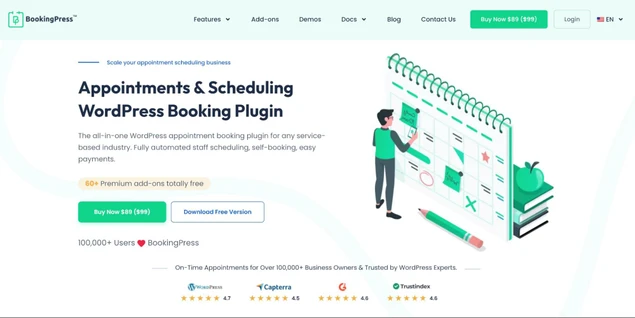
Most booking systems are underused. With software for appointment scheduling like BookingPress, clients don’t just book slots.
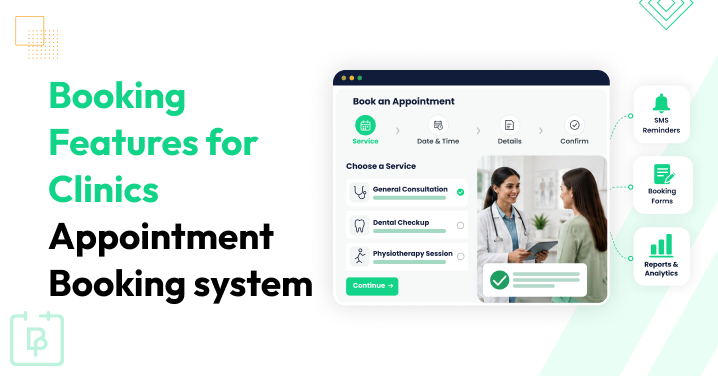
The online booking shapes the experience before it starts at your salon or clinic. With the smart in-advance scheduling and client self-booking, you get fewer mismatches, fewer awkward sessions, and a higher repeat rate.
So, how does the BookingPress plugin help you with marketing, upsells and actual customer experience improvements? Here are just a few options for clients:
- An easy way to add chosen service extras to improve their appointment.
- The ability to choose the duration of their appointment (e.g. the length of the massage).
- Multiple contextual discounts, like ‘happy hours’ (cheaper at a specific time), based on quantity and number of appointments, etc.
- Easy repeating appointments.
- Gift card opportunity to give unique presents to their friends and family.
- Smooth and convenient payment online with SMS or messenger notifications (no need to worry if the time is truly booked).
Don’t miss any appointments and build a better monetization model – one piece of software like BookingPress can do a huge job here.
5. AI tools to speed up interactions with clients

Yes, AI tools are not perfectly mature for each and every case, but they help automate what can be automated and speed up your interactions with clients. All in all, AI works best when it removes tiny annoyances. Some practical uses include:
- Auto-summarize sessions for clients (e.g. coaches send AI-generated recap notes).
- Smart reminders. (“Last time you booked a haircut after 5 weeks – want to rebook?”).
- Intake form analysis (flag high-risk patients or special needs automatically).
- Scan patient notes or highlight “follow-up required in 2 weeks”.
6. POS hardware for speed and perceived professionalism

Modern POS hardware isn’t just about payment at your office – it’s about ending smoothly and full connection to online booking or e-commerce experiences. Real improvements that POS software can bring to your business and clients:
- Tap-to-pay – Reduces awkward waiting.
- Split payments instantly (common in coaching or group sessions).
- Auto-send receipts + rebooking link.
For example, a yoga studio can easily manage classes, because it’s as easy as clients tapping phone – payment done – rebooking links sent. A great way to avoid lines and drop-offs.
7. Build “return triggers” for customers
Traditional loyalty programs may be far from reality. Discount cards are lazy retention. Today, there is a better trend for natural return moments. What does that even mean? It totally relies on your abilities to predict their future needs. For example:
- “Your haircut will lose shape in ~4 weeks”.
- “We’ll review progress in 2 weeks – book now or later”.
Moreover, personalized recommendations sent over time can also serve as such triggers. A trigger can automatically suggest alternative products or services that they might prefer in the future.
8. Train staff to recognize repeat clients
At the end of the day, your staff plays a major role. Active listening, service standards, and software / CRM to improve and simplify communication with clients are crucial. Through specific soft skills and marketing training, you can train your staff to easily recognize potentially loyal clients.
On a regular basis, you may even use role-playing by using realistic training scenarios like “The Engaged Customer,” where staff practice upselling by mentioning how close the customer is to their next reward.
9. Use “micro-commitments” during the service

The entire appointment time works on the retention, so the latter starts before the session ends. Using psychological tricks, people continue what they’ve already mentally committed to, for instance:
- Coach: “Next time, we’ll review this habit – sound good?”
- Teacher: “Next lesson builds directly on this – don’t skip it.”
- Therapist: “This works best over 3 sessions.”
10. Always measure customer satisfaction & retention properly
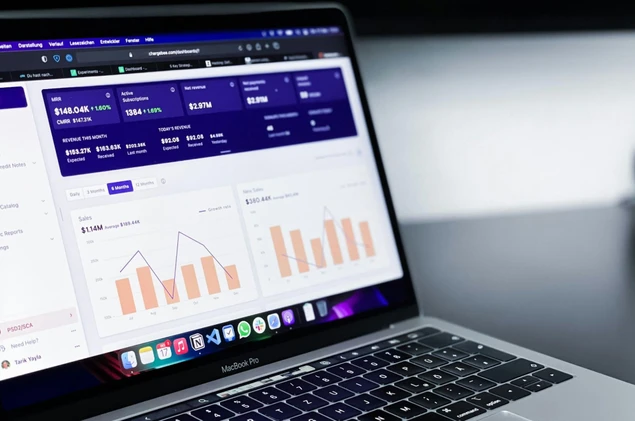
Retention, churn and other performance metrics should always be the pulse of your marketing team. Here are a few formulas to help you manage the process:
1. Repeat booking rate
Formula: Repeat Booking Rate = Returning Clients / Total Clients
Example:
- 120 clients in a month
- 45 came back
- Repeat rate = 37.5%
2. Client return interval
Measured by how long it takes clients to come back. If intervals grow, satisfaction is dropping (even if reviews look fine).
For example:
- Hair salon: 5-7 weeks is healthy
- Coaching: 1-2 weeks
- Medical follow-ups: depend on the treatment cycle
3. Churn rate (who you’re losing)
Churn Rate = Clients Who Didn’t Return / Total Clients
You may track it:
- after the first visit
- after 3 visits
Many businesses lose clients after visit #1 – that’s where you fix things.
4. Rebooking rate
Rebooking Rate = Clients who book the next session immediately / total clients.
This is huge for salons, coaching, therapy, etc. If this is low, your end-of-session experience is weak.
5. Build a simple retention loop
Based on those formulas, here’s a practical system template for building such a loop:
- Track: repeat rate, rebooking rate and return interval.
- Identify drop-offs: after the first visit? after 2–3 visits?
- Fix specific stages: onboarding (first visit), session experience, follow-up, etc.
- Test small changes: new follow-up message, better booking flow, staff script improvements.
- Measure again (monthly).
Concluding: Keep Customers Satisfied and Coming Back
Most service businesses try to grow by getting more clients – but this is in the forward-looking perspective, much harder than serving the current ones better.
Make retention your actual business and economic model to see the changes in the client and staff behavior. Know your metrics and employ them in your real-life scenario. And watch clients coming back for more!
You May Also Like:
 14-day money-back guarantee