

Many service businesses unknowingly lose revenue by charging the same booking rates every day of the year. But customer demand doesn’t stay the same.
Weekend appointments fill faster. Holiday periods get busier. Some seasons make overwhelming demand, while others….they just leave calendars half empty.
If your Saturdays are fully booked while weekdays stay quiet, your service pricing strategy probably needs adjustment.
Setting up smart seasonal pricing and weekend booking rates help you balance demand, protect your schedule and improve profitability. Plus, no need for constant increasing workload.
In this guide, we’ll look at proven practical ways to set booking rates and prices more strategically without overcomplicating your pricing system.
So, here we go…
TL;DR: Weekend booking rates and seasonal pricing help you earn more by charging higher prices during peak demand and lowering them strategically during slow periods. A smart dynamic pricing approach balances demand, gives you better profitability and keeps your booking calendar full year-round.
Raise Prices Only On Your Most Requested Slots

Not every booking slot deserves a price increase.
Thus far, we know not every demand spike, peak time, or customer visit justifies charging more. In fact, sometimes hiking the price just annoys people without actually making you more money
That’s why, the smartest pricing strategy is increasing rates only where customer demand is already high. If certain appointment times consistently fill faster than others, customers are already showing they’re willing to pay more for that convenience.
For many service businesses, those high demand slots are mostly:
- Friday evening appointments.
- Saturdays and Sundays.
- After work hours.
- Holiday weekends.
- Last minute premium bookings.
A simple rule works well here:
- If specific slots regularly get booked days or weeks in advance, they’re probably underpriced.
That’s your green flag to go. Start by applying small premium pricing only to those high demand periods. Even a very small 5% to 10% increase on your busiest slots can boost your overall business revenue without affecting overall booking volume.
Now sure you can go up to 15% to 20% price increase as well, but only if you see the customer demand still with no negative impact on booking volume.
This pricing strategy also protects customer trust because weekday or lower demand bookings still remain affordable.
Increase Weekend Rates Gradually, Not Aggressively

One of the fastest ways to frustrate repeat customers is…. suddenly increasing weekend booking rates too much.
Even if demand is good, aggressive pricing jumps can make customers feel like they’re being overcharged overnight. That’s why the best approach to avoid such sticker stocks is gradual adjustment.
Start with a small increase, usually around 10%. That’s it! Don’t think about going beyond this unless you are 100% sure it won’t affect your booking volume or have zero competition (Because in most cases sudden high price hikes leads customers to book with others)
After increasing your service price to bare minimum, monitor the booking behavior for a few weeks. If weekends still fill at the same pace, you can slowly raise rates again later.
This gives you time to:
- measure customer response,
- track conversion rates,
- avoid sudden booking drops,
- and find the highest profitable price point naturally.
Gradual pricing changes also feel more reasonable to loyal customers, especially for businesses that rely on repeat bookings
Charge More During Your “Chaos Seasons”
Every service business has periods where demand becomes difficult to manage.
For some businesses, it’s the holiday rush. For others, it’s wedding season, summer tourism, back-to-school periods or local events that suddenly flood the calendar with bookings.
These are your “chaos seasons.”
During these periods:
- schedules fill faster,
- staff workload increases,
- operational pressure grows,
- and last-minute availability becomes limited.
That higher demand should influence your booking prices too. So rather than just keeping the same booking rates during your busiest months, apply temporary seasonal pricing increases where demand naturally supports it.
A simple seasonal pricing framework works best:
- Normal season → Base rate
- Busy season → +15–25%
- Major holiday/event period → +25–40%
For example:
If your normal booking price is $100:
- Busy season → $115–125
- Holiday rush → $130–140
Small increases across fully booked weeks can create major revenue improvements without adding extra workload.
Many businesses make the mistake of waiting until they feel overwhelmed before adjusting prices. By then, they’re already fully booked and leaving revenue on the table. You shouldn’t repeat the same mistakes they did.
Lower Prices Only Where You Have Empty Time

One of the biggest pricing mistakes businesses make is discounting everything rather than fixing low demand periods strategically.
You should never lower prices on slots that already book easily. Just lower booking rates only where you consistently struggle to fill time such as:
- weekday afternoons.
- off-season weeks.
- midday appointments.
- last-minute cancellations.
- or slower months.
To help you understand it better, here’s a practical example:
- Normal booking price → $100
Thus rather than discounting everything to $85, do this:
- Saturday booking → $115
- Weekday morning → $100
- Slow Wednesday afternoon → $85
This protects your profitable booking periods while helping fill under performing time slots.
The biggest mistake many make is making everything cheaper, where the goal of smart pricing is about balancing demand.
Create Better Prices For Longer Bookings

Longer bookings are more profitable than shorter ones, even when the price per session is slightly lower. Why? Because longer bookings means:
- Fewer scheduling gaps,
- Lower admin work,
- Reduced customer acquisition costs,
- And more predictable revenue.
That’s why many service businesses offer small pricing incentives for extended bookings, packages or multi session reservations. Also, you can offer them as:
- Weekly packages.
- Multi-day bookings.
- Monthly memberships.
- Or bundled appointments.
The key is keeping discounts controlled and profitable.
A simple pricing ladder works well here:
- 1 booking → Full price.
- 3 to 5 bookings → 5% discount.
- Weekly/monthly package → 10–20% discount.
Suppose let’s say if one session costs $100:
- 1 session → $100.
- 5 sessions with 5% off → $475. (not $500)
- 10 sessions with 15% off → $850. (not $1,000)
The customer saves money while the business secures larger guaranteed revenue which makes this a win-win situation for both. But remember…before offering any long booking discount, make sure the reduced rate still covers all of the:
- Operational costs.
- Staff time.
- Platform fees.
- And your target profit margin.
Being busy is good. Being busy profitably is better.
Use Premium Pricing For High-Effort Services

Not every booking creates the same amount of work behind the scenes.
Some services needs:
- extra preparation,
- longer appointment times,
- additional staff,
- travel,
- specialized equipment,
- or higher operational pressure.
Thus those bookings should never be priced the same as the standard appointments. And when we talk about services that required high effort, that can be:
- Emergency or same-day bookings.
- Mobile or on-site services.
- Group sessions.
- Extended consultations.
- Weekend call-outs.
- Premium support requests.
- Or holiday appointments.
Many businesses under price these services simply because they focus only on time, not effort. But effort directly affects profitability.
Adding premium pricing for high effort bookings helps you protect staff workload, improve profit margins, and lower burnout as well make demanding bookings financially worthwhile.
Watch These Numbers Before Changing Prices

One of the biggest pricing mistakes businesses make is changing seasonal and weekend booking rates based on emotion rather than actual booking behavior.
Good pricing decisions should come from patterns your business is already showing you. So before you start adjusting seasonal pricing or weekend booking rates, look closely at:
- How quickly weekends sell out.
- Which slots stay empty.
- Cancellation frequency.
- Repeat booking trends.
- Staff workload.
- revenue per booking.
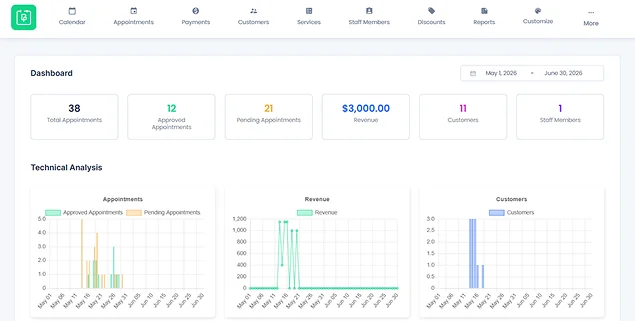
The best part? You can use online booking solutions like BookingPress to track and get data-based insights. It comes with a centralized dashboard where you can see all your revenue, customers, appointments and staff members alongside a real time detailed technical analysis chart.
For example, fully booked Saturdays may be a sign of under pricing, while constant weekday gaps will need targeted incentives, and rising operational stress should justify premium seasonal rates.
Many businesses also make the mistake of pricing based only on competitors. But competitor pricing does not show nor reflect:
- Your workload.
- Your operational costs.
- Your customer demand.
- or the value of your service experience.
A packed calendar alone is not always a sign of healthy pricing. Because many times, fewer bookings with better margins creates good profitability, less burnout, and higher service quality along with more sustainable growth long term.
Don’t Make These Common Weekends & Seasonal Pricing Mistakes

Businesses using dynamic pricing strategies generate around 15% to 25% more revenue compared to businesses relying on static pricing models. Even a small 1% pricing increase can improve operating profit far better when applied strategically.
But booking pricing changes only work when they’re backed by smart operational decisions.
Thus here are some of the most common mistakes we’ve seen service businesses make when setting weekend booking rates and seasonal pricing:
Copying Competitor Prices Blindly
Many businesses price their services by simply checking what competitors charge and matching it.
The problem is that competitor pricing rarely shows your ACTUAL business reality.
Your pricing should account for:
- Operational costs,
- Workload,
- Customer demand,
- Service quality,
- And overall booking experience.
On the slip side, a competitor may operate with lower costs, offer fewer services, accept lower margins or target completely different customers. You never know.
Thus blindly matching lower prices can quickly lower your own profitability, especially during high demand periods where your workload and operating pressure increase.
Competitor booking rates and pricing research is helpful, but your booking patterns and business costs should drive your final pricing strategy.
Discounting Too Early
One of the fastest ways to weaken your pricing power is offering discounts too aggressively or too early.
Many businesses lower rates weeks in advance just to secure bookings, but constant promotions can slowly train customers to wait for cheaper prices. So, they never book at full value.
In many industries, moderate early discounts perform better than aggressive price cuts. Businesses mostly keep advance booking offers small while reserving big discounts only for genuinely hard-to-fill last-minute availability.
The goal is protecting your average booking value while still managing occupancy effectively.
Keeping The Same Rates All Year
Customer demand ALWAYS changes throughout the year. Weekends, holidays, school vacations, tourist seasons, local events and peak business periods all affect booking behavior.
And staying with the same rates for too long can quietly lower your own margins as staffing costs, utilities, software subscriptions and operational expenses continue increasing year after year.
Ignoring Operational Costs
A packed calendar does not always mean a profitable business.
One of the biggest pricing mistakes businesses make is focusing only on market prices while ignoring their actual operational costs.
Your booking prices should account for:
- Staff wages.
- Overtime.
- Platform fees.
- Software tools.
- Utilities.
- Equipment.
- Admin time.
- Seasonal operational pressure.
Busy periods mostly create higher delivery costs as well. That’s why more bookings needs additional staffing, extra working hours, faster turnaround times or extra customer support.
If pricing does not show those realities, your service businesses end up working harder without improving profitability.
Raising Prices Without Improving Experience
Customers are usually willing to accept higher weekend rates or seasonal pricing when the overall experience still feels valuable.
Problems begin when businesses raise prices while keeping the same:
- service quality,
- communication,
- booking experience,
- response times,
- or convenience.
Higher pricing naturally increases customer expectations.
When customers pay premium rates, they expect go premium as well for getting:
- smoother scheduling,
- stronger reliability,
- faster support,
- and better overall service quality.
The most successful businesses use seasonal pricing increases to maintain better experiences during busy periods.
Build A Simple Pricing System You Can Actually Manage
A good service pricing strategy should make your service-based business easier to run, never harder to maintain.
No matter whether you run a salon, spa, gym, fitness studio, consultancy firm or rental store, setting up seasonal rates and weekend rates is easy once you start identifying:
- Your minimum profitable booking price.
- Your highest-demand time slots.
- Your busiest seasonal periods.
Your pricing should always cover operational costs first, including staffing, software, utilities and administrative overhead. After your baseline is clear, you can build smarter
The most effective pricing systems are always automated. And by using tools like BookingPress Happy Hours Pricing Addon, businesses can automatically apply dynamic pricing based on:
- Weekends.
- Seasonal date ranges.
- Holidays.
- Specific time slots
- Peak booking hours.
The goal is simple. Built a flexible system that improves revenue while staying easy to manage long term.
Related articles:

 14-day money-back guarantee