

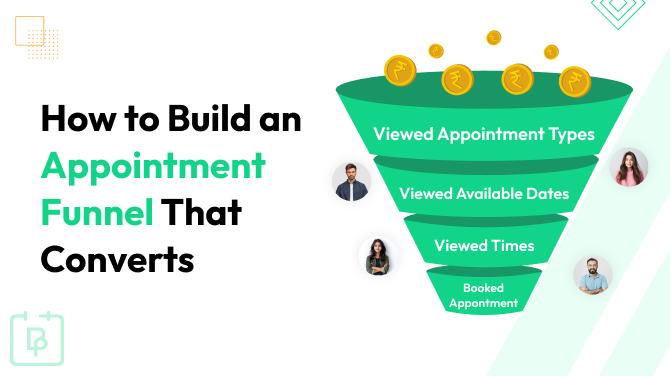
An appointment funnel is essentially a step-by-step guide for converting your visitors into paying customers. When you understand your funnel and fully realize your customer’s journey, you can spot problems that can be fixed.
If you’re looking to learn more about building such a funnel for your specific business case, or want to identify common problems and learn through a case example, this tutorial includes everything you need – from explaining the concept of an appointment funnel and how it differs across various business niches, to a complete hands-on example with detailed features that influence conversions and help turn visitors into customers, and customers into repeat customers!
Let’s get started.
TL;DR: An appointment funnel helps turn visitors into paying customers through personalized booking flows, automation, trust building and follow ups. You can use tools like BookingPress to automate every step of the appointment funnel from scheduling and upsells to appointment reminders, recurring bookings and customer retention
Let’s Understand the Concept of The Appointment Funnel
In the appointment-focused business, your scheduling page is central (whether it’s a site or Google calendar link).
However, a booking page only lets someone schedule, but an appointment funnel is broader: it deals with the entire cycle of marketing, persuasion, lead collection, automation, and follow-up before and after the booking.
With an appointment funnel plan at hand, you can potentially:
- Increase bookings
- Reduce no-shows
- Automate scheduling
- Capture leads even if people don’t book immediately
- Improve conversion rates
- Track marketing performance.
Tools Used in Appointment Funnels
To create a funnel, you need to have tools that help you automate and analyze every step of it. For appointment scheduling businesses, these may be:
- Booking software
- External ads
- Landing page builders
- CRM systems
- Email/SMS automation
- Payment collection
- Calendar integrations
What Type of Funnel Does Your Business Need?
Appointment funnels differ because businesses have various customer motivations, pricing levels, trust requirements, urgency, etc. A haircut, a legal consultation, and a doctor appointment booking all require very different customer journeys. Let’s better understand why.
Low-Commitment Vs High-Commitment Services
Low-commitment services like hair salons or fitness classes need funnels that involve a fast booking process, with minimal education needed, few steps, and maximum convenience. A funnel may look so:
Google Maps → booking page → choose time → confirmation.
In such a funnel, your customers already understand the service and just need to make sure that the price, availability, and location suit their needs.
High-commitment services, where, for example, lawyers, financial advisors, or therapists are involved, may require a longer trust-building process, educational content, testimonials, credentials, and discovery calls. That’s why a typical funnel may have this structure:
Ad/content → webinar or guide → consultation form → qualification → appointment.
Risk, emotional investment, cost, and consequences have different levels in these businesses; people need reassurance and research with some services more than with others.
Urgent And Non-Urgent Services
The appointment funnel can also be different based on whether it’s an urgent service. Emergency dental clinics, locksmiths, repair technicians or same-day medical appointments require focusing on immediate CTAs, click-to-call buttons, fast scheduling, and location visibility.
Here, people want immediate help.
With non-urgent services, like wellness coaching or personal training, funnels are built around email nurturing, social proof, retargeting ads, and multiple touchpoints. Customers may take days or weeks before committing, thus, the funnel needs to be built on staying top-of-mind.
One-Time And Recurring Appointments
One-time appointment businesses – such as immigration lawyers or wedding photographers focus on higher-ticket conversion, consultation quality, and proposal process. The customer lifetime value is based on a single large purchase.
Recurring appointment businesses (salons, tutors, spas) build their funnel around retention, memberships, rebooking automation, and loyalty incentives. When long-term customer value matters more than one booking; marketing teams structure funnels around reminders, subscription offers, or repeat scheduling campaigns.
Local Vs Remote Service Businesses
Salons and auto repair shops have Google Business visibility, Maps SEO, and Local reviews as their funnel priorities. For them, typical entry points into the funnel include Google Search, Google Maps, and Local ads.
However, remote businesses like online coaching, telehealth, and virtual consulting prioritize video content, time-zone scheduling, automated onboarding, and CRM integrations. Basically, funnel replaces in-person trust digitally.
Building An Appointment Funnel That Converts: 7 Steps
As you see, all funnels have common characteristics and tools but still differ based on the business specifics.
To create an example appointment funnel, let’s take a local wellness center as an example + BookingPress as a tool to accept bookings for appointments on a WordPress site.
It should guide visitors from discovery to repeat bookings (with trust, personalization, and customer lifetime value in the spotlight).
A good wellness funnel helps clients:
- choose the right location,
- pick the right therapist or practitioner,
- customize services,
- schedule recurring treatments,
- purchase service packages,
- get loyalty bonuses and coupons,
- and stay engaged after the appointment.
Using BookingPress and its add-ons, you can create a fully automated wellness booking funnel directly in WordPress following the next steps.
1. Attract Visitors

The first stage of the funnel is bringing potential clients to your wellness center website. Traffic sources for this funnel step can be:
- Google search
- Local SEO
- Instagram wellness content
- Facebook ads
- Referral campaigns
- Email newsletters
For example: “Book a relaxing aromatherapy massage in under 60 seconds”.
At this stage, your goal is not to explain every service in detail but to appeal to those who have specific needs.
A wellness center funnel can traditionally perform better for seasonal promotions, wellness memberships, first-time visitor discounts, and package offers.
2. Capture Interest With Service Discovery
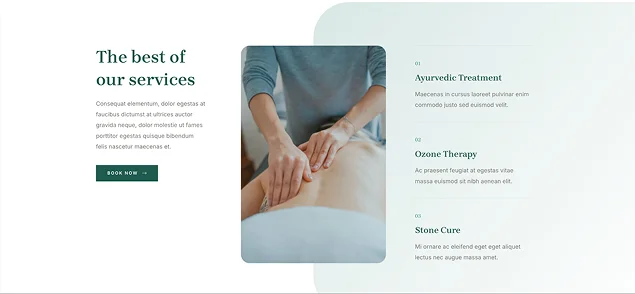
When visitors finally reach your website, you need to make the booking experience personalized. Make sure your site has everything they might be interested in:
- multiple wellness services,
- treatment categories,
- therapist profiles,
- availability,
- educational content,
- and booking forms.
3. Build Trust
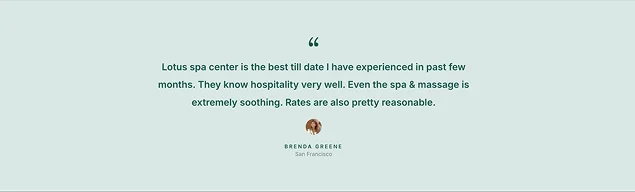
When you have their interest, next, you need to make them trust you. For a wellness center, testimonials, reviews and case studies are a great way to do so. Pricing clarity and FAQs also matter for trust. Moreover, add a quick contact button and a map with a real address and photos.
4. Encourage Bookings With Personalized Scheduling
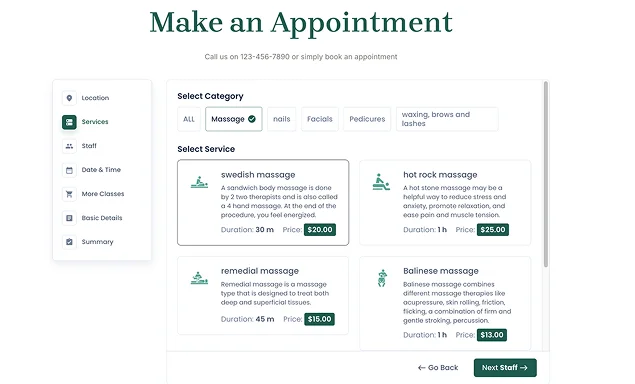
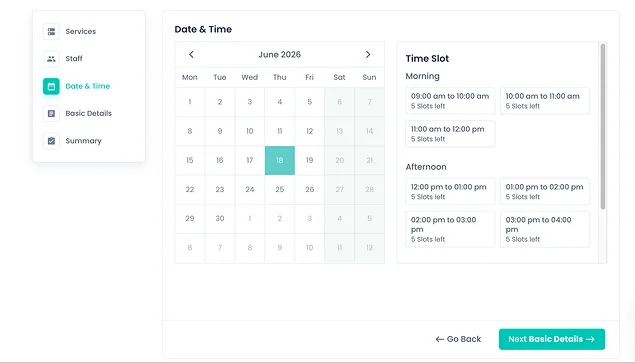
This is the core conversion step of the funnel. Let’s get into more details with the BookingPress booking form and see how a wellness center funnel should use its capabilities.
Step 1: Select A Location
If your wellness brand has multiple branches, use the BookingPress Location add-on. The multi-location tool allows you to create separate schedules and staff availability. For customers, it’s a simple step to start their personalization journey.
Step 2: Choose A Staff Member
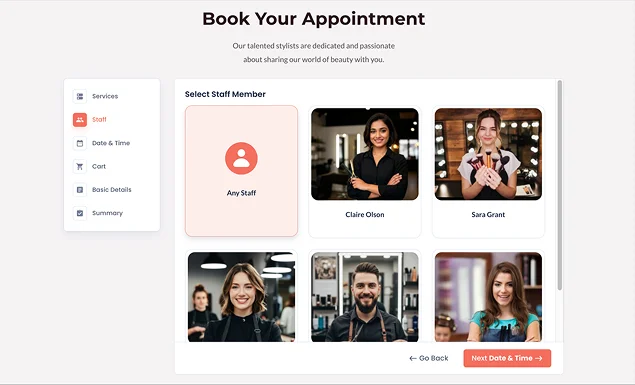
Many wellness clients prefer specific therapists or practitioners. Using the Staff Member add-on in your BookingPress booking system, clients can see names and select:
- massage therapists,
- yoga instructors,
- wellness coaches,
- or nutrition experts.
For the appointment funnel, it’s important to increase trust and repeat bookings.
Step 3: Choose Service Duration
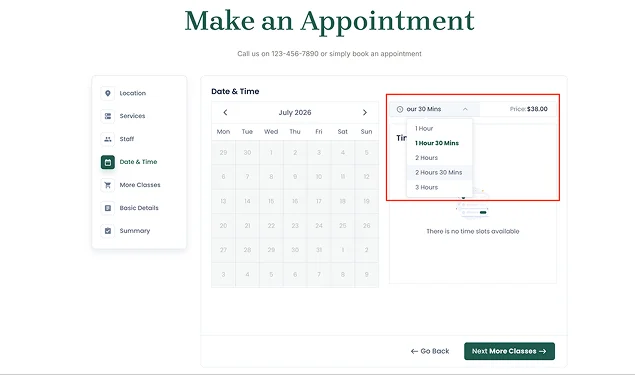
Different clients may want a 30-minute express massage or 90-minute premium session. The Custom Service Duration add-on allows flexible appointment lengths and pricing.
This is a need for wellness businesses because treatment duration directly affects pricing and scheduling efficiency.
Step 4: Add Extras And Enhancements
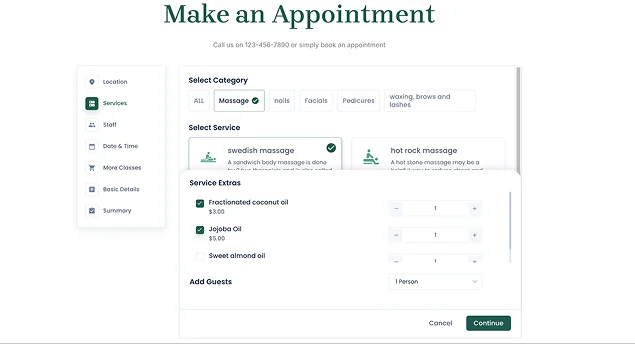
Upsells are super important for wellness funnels. For example, in BookingPress, you can simply add the Service Extra add-on and allow customers to add aromatherapy oils, hot stones, detox drinks, meditation kits, and other spa upgrades.
For your business, it’s an increase in the average booking value naturally.
Step 5: Book For Multiple People
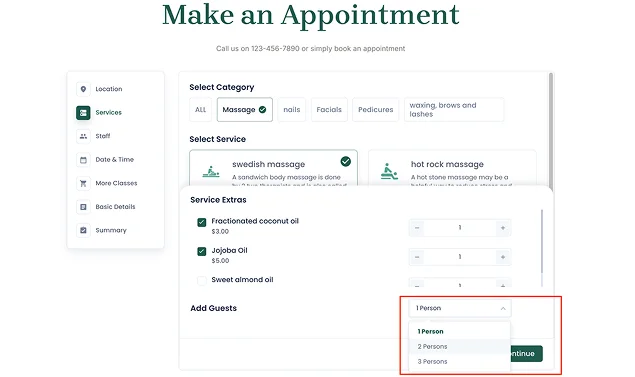
Wellness centers often sell couples massages or group yoga, so why not give them this flexibility? With BookingPress, we simply add the Multiple Quantity add-on, which allows customers to book for multiple guests in one reservation.
Step 6: Offer Free And Paid Services
Some wellness funnels convert better when something free is offered – like a free consultation or wellness assessments. BookingPress supports both free and paid appointments with online payment integrations including Stripe, PayPal, Mollie, Klarna, WooCommerce, and more.
Step 7: Sell Wellness Packages Instead Of Single Sessions
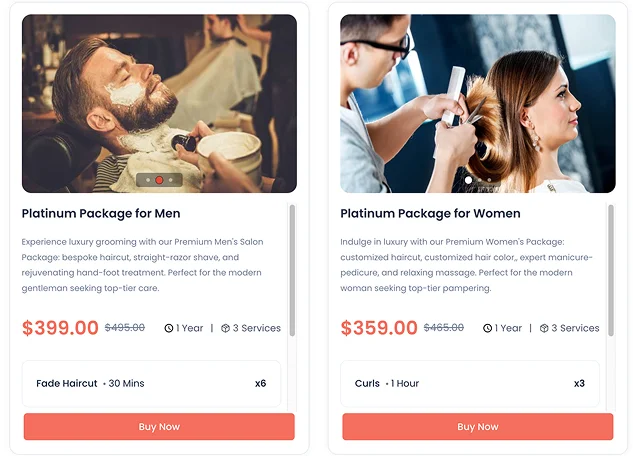
One of the highest-converting wellness funnel strategies is selling packages rather than one-time treatments. Again, in BookingPress, we can do that using the Service Package add-on. It allows wellness centers to bundle services like monthly yoga access, detox programs, stress relief packages, etc.
Step 8: Simplify Online Checkout
A secure and fast checkout that offers familiar payment methods allows you to eventually have full trust of your customers. In the booking wizard by BookingPress, you can enable almost any gateway possible.
Step 9: Encourage Recurring Appointments
Recurring bookings are critical for wellness businesses and their appointment funnels – because many services require ongoing sessions. The Recurring Appointments add-on allows customers to schedule any services that can repeat, e.g. weekly therapy, monthly wellness check-ins, etc.
5. Reduce Drop-Off During Checkout & Convert Into Customer
A wellness booking funnel should feel smooth and calming, aiming to turn a visitor into a customer. Useful BookingPress features for this part of the panel may include:
- cart booking
- deposit payments
- coupon codes
- gift cards
- dynamic pricing
- simplified checkout flows
The Advanced Discount and Coupons add-ons are especially useful for seasonal wellness promotions.
6. Automate Follow-Ups And Nurturing
The thing is, the funnel continues after the appointment is booked. Automation is your true friend at this stage.
For example, you can follow up your buyers professionally with email marketing integrations.
For instance, in BookingPress, we can use Mailchimp, AWeber, Omnisend, and Zapier workflows.
You can automatically:
- add clients to wellness newsletters,
- send self-care tips,
- promote seasonal offers,
- recommend additional services,
- and trigger abandoned booking reminders.
CRM and workflow automation are also extra software for a successful appointment funnel. Using Zapier integration, you can connect BookingPress with HubSpot, Salesforce, Pipedrive, and other CRM systems. Or, you can also use a direct connection with FluentCRM.
This allows wellness centers to track customer journeys, segment VIP clients, and automate lead follow-ups beyond booking confirmation emails.
Example workflow for the funnel:
New booking → Add customer to CRM → Send welcome sequence → Trigger rebooking campaign after 30 days.
7. Improve Attendance And Reduce No-Shows
As we’ve said, the funnel continues in many ways after the appointment – especially for recurring and low-commitment niches like wellness centers.
Yes, wellness businesses lose significant revenue from missed appointments. To prevent this, we can use BookingPress for email notifications, SMS reminders, WhatsApp notifications, Telegram alerts, and calendar sync integrations. You’ve got all the tools to help clients remember appointments and reduce gaps.
8. Build Retention With Customer Accounts
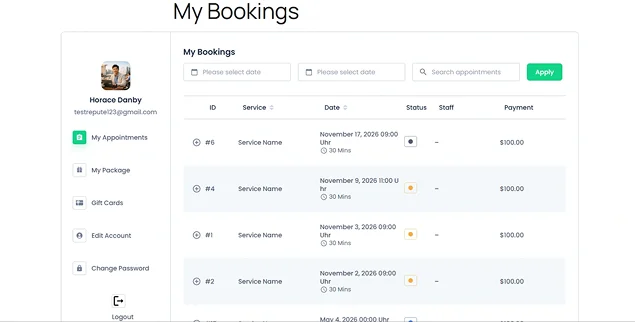
Returning clients should not need to start from scratch. Some appointment funnels, like wellness centers, should have customer accounts for easier rebooking. Particularly in BookingPress, customers can:
- view appointments,
- reschedule sessions,
- rebook favorite services,
- manage recurring bookings,
- and access wellness packages.
Your funnel needs this for customer convenience and the increase of repeat business.
Example Wellness Appointment Funnel
Here’s what a complete wellness center funnel may look like:
Instagram Ad → Landing Page → Select Wellness Goal → Choose Location → Select Therapist → Choose Service Duration → Add Upgrade → (alternatively )Buy 5-Session Package → Pay Deposit → Receive SMS Reminder → Attend Appointment → Get Follow-Up Email → Book Recurring Sessions.
Why This Funnel Works For Wellness Centers
So, why do we think our appointment funnel example for wellness businesses would work? Behind the specific software and tool features, you’ll see the real needs covered: trust, personalization, online booking convenience, emotional comfort, and repeat visits.
That’s why wellness appointment funnels should focus on:
- easy customization,
- therapist selection,
- recurring care,
- packages,
- and long-term engagement.
Since we’ve showcased specific BookingPress features to meet these funnel needs, you can use it to build a highly personalized funnel that goes far beyond a basic booking calendar for any similar business niche.
Final Word: Identify Your Funnel Type & Build Automation with Software
Of course, every appointment funnel will differ depending on the exact type of business. An urgent-care clinic will structure its funnel differently than a luxury wellness retreat. Focused on recurring appointments, you’ll prioritize memberships and automated rebooking, but as a high-ticket one-time consultation service, you may focus more on leads and trust.
However, as you can see from our wellness center example, a huge part of the appointment funnel can be automated – and successfully converted – with just one piece of software.
Using BookingPress, you can build and automate around 80% of the appointment funnel experience: from personalized booking flows and convenient scheduling to upsells, cross-sells, recurring appointments, follow-ups, customer accounts, coupons, loyalty incentives, and automated notifications via email, SMS, WhatsApp, and Telegram.
In many cases, the only major part of the funnel that happens outside the software is the very beginning – your marketing activities that bring visitors to your website in the first place (Google Ads, SEO, Facebook and Instagram campaigns).
Why not start improving your appointment funnel step by step using a structured approach and automation tools that already solve most of the process for you?
Related articles:
 14-day money-back guarantee