

Most service businesses treat pricing as a fixed number.
Set a rate. Add it to your booking system. Done.
But this approach fails at scale. Static pricing quietly limits your revenue. It ignores demand, customer behavior and timing. And over time, that gap adds up to lost income you never even notice.
Your online booking system can be more than just a scheduling tool. It’s a revenue engine if you use it right.
The difference between average and high performing service businesses comes down to one thing: how intelligently they price their services inside their booking system.
Most businesses overlook this. You don’t have to.
What you charge matters. When you charge it matters more. Here’s how.
Why Pricing in a Booking System Works Differently
Most service businesses treat their online booking system as a digital calendar or a way to accept online bookings. That’s it. They never think far, and that’s exactly what stops their growth.
Pricing inside a booking system is all about when, how, and to whom you charge it.
Here’s why pricing strategies in Booking system changes the game:
1. Demand Is Visible (And Actionable)
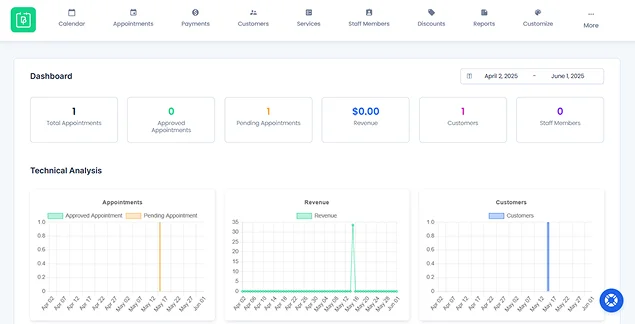
For most service businesses, demand is hard to measure in real time. But your booking system shows it clearly:
- Which time slots fill up fastest
- When cancellations happen
- What days or hours stay under booked
Insight: Demand isn’t evenly distributed.
Mistake: Charging the same price for high demand and low demand slots.
Thus, you can adjust pricing based on real usage patterns.
The best part? If you’re using BookingPress, a feature-rich WordPress appointment booking plugin, you get an centralized analytics dashboard which gives you a quick overview of your complete appointment business along with detailed reports.
2. Time Becomes a Pricing Lever
In a booking system, time isn’t just a schedule. It’s inventory.
- Every empty slot = lost revenue.
- Every overbooked slot = missed pricing opportunity.
Why? Because not all hours have the same value.
Let’s say:
- Evening slots → higher demand → higher price potential.
- Midday or weekdays → lower demand → discount opportunities.
Strategic shift: Stop just filling your time. Price it intelligently.
3. Customer Behavior Is Trackable
Unlike offline pricing, booking systems capture behavior:
- Repeat bookings.
- Last minute bookings.
- No shows and cancellations.
- Response to discounts or offers.
Insight: Not all customers have the same value.
Mistake: Treating every customer the same.
Thus, here’s what smart service businesses do:
- Reward loyal customers.
- Incentivize off peak bookings.
- Charge premiums for urgency (last minute slots)
4. Pricing Can Be Automated (Not Manual)
Traditional pricing always needs constant updates, but online appointment scheduling systems don’t. Having a booking systems like BookingPress allow you to:
Set rules once. And let the system adjust pricing automatically.
Insight: Manual pricing doesn’t grow business.
Risk: Static pricing becomes outdated quickly.
That’s why you can easily move from reactive pricing → proactive pricing.
5. Every Pricing Decision Impacts Utilization
Your pricing strategies for the booking system directly affects how full your calendar gets.
- High prices → fewer bookings but higher margins
- Lower prices → more bookings but lower margins
The real goal. Find the balance where revenue per slot × utilization rate is maximized.
The Strategic Takeaway
Most service businesses use their online booking system to manage appointments. Yet, high performing businesses use it to manage revenue.
That’s the shift:
- From fixed pricing → dynamic pricing
- From manual decisions → automated rules
- From filling slots → maximizing value per slot
And this isn’t just theory anymore.
Modern WordPress appointment booking plugins like BookingPress already give you the tools to implement these pricing strategies directly without complex setups or custom code.
So, the real question is “Are you using your booking system to its full potential?”
Now that you understand why pricing works differently inside a booking system, let’s look at how you can implement these pricing strategies using BookingPress.
Here are the 5 practical pricing strategies you can set up right away.
1. Dynamic Time Based Pricing (Peak vs Off-Peak Revenue Strategy)

Most service businesses set one price and apply it to every booking.
It feels simple. But it creates a hidden problem.
You end up charging the same price for your busiest hours and your slowest ones. Over time, that leads to missed revenue and empty slots you could have filled.
This is where time based pricing makes a real difference.
If you’re using BookingPress as your ultimate appointment booking software, you can adjust your pricing based on when a customer books with ease. It’s Happy Hours Pricing addon lest you set different prices for specific time slots, days or even special dates.
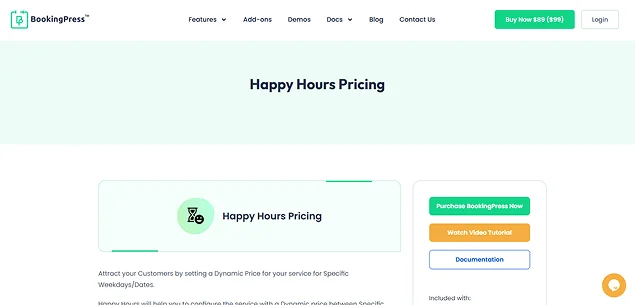
And the best part? It works automatically.
Whenever any customer picks a time slot, the BookingPress applies the correct pricing by itself, without you adjusting anything.
This way you can:
- Offer lower prices during weekday afternoons to get more bookings.
- Set standard or higher pricing for evenings and weekends when demand is higher.
It’s also a smarter way to offer discounts.
Rather than lowering prices for everyone, you only apply discounts where they’re actually needed. Your high demand slots stay profitable and your low demand slots become easier to fill.
If you often see certain hours fully booked while others stay empty, this strategy can make an immediate impact.
You don’t need more bookings. You need better pricing. And with BookingPress, you can start doing that directly inside your booking system.
2. Tiered Pricing Based on Service Duration
Most service businesses price their sessions as fixed blocks.
- 30 minutes = one price.
- 60 minutes = double the price.
It feels logical. But it doesn’t always reflect how your time actually works.
Longer bookings are often more efficient. You spend less time on setup, transitions and admin. But if your pricing doesn’t account for that, you miss an opportunity to increase your overall revenue.
This is where duration based pricing helps.
If you’re using BookingPress, the Custom Service Duration addon lets you set flexible pricing based on how long a customer books. You can set unit pricing, minimum or maximum duration and even create pricing caps for extended sessions.
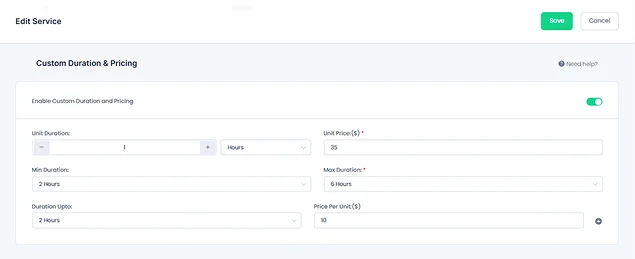
Also with this, you don’t force your customers into fixed slots. You give them options, and price those options strategically.
The system automatically calculates the total price when a customer selects their preferred duration.
No manual calculations. No confusion.
It increases your average booking value without needing more customers.Plus, it improves your time with way more efficiency than you think.
Moreover, it lets you encourage fewer but longer sessions that generate more revenue with less operational efforts.
If your service allows flexible durations like consulting, coaching, therapy, or training, this pricing strategy can make a noticeable difference.
You’re not just selling time. You’re packaging it in a way that works better for both your customer and your business. And with BookingPress, you can set it up once and let the system handle the rest.
3. Conditional Discounts Based on Customer Behavior

Most businesses use discounts the same way.
Create a coupon. Share it. Hope it works.
But this way is simply just…..unpredictable. You end up giving discounts to everyone, even when it’s not needed. And that’s why our next most effective pricing strategy is conditional discounts.
Conditional discounts means you apply discounts based on how customers behave rather than simply flat discounts.
If you’re using BookingPress, the Advanced Discount addon lets you create rule based discounts that trigger automatically. You can set conditions based on bookings, total amount, services, dates or even the number of attendees.
So the discount is not random. It’s intentional. And the best part? It all happens automatically.
Customers see the discount applied at checkout. No coupon codes, no manual steps!
This makes your offers feel smoother and more professional. Plus, it also protects your revenue as you only offer incentives when they help you:
- Increase order value.
- Fill specific slots.
- Encourage repeat bookings.
If you’re currently using discounts just to attract customers, this is a smarter upgrade.
You can use discounts as a strategy to influence behavior. And with BookingPress, you can set these rules once and let the system take care of everything else.
4. Service Bundling (Package Based Pricing Strategy)
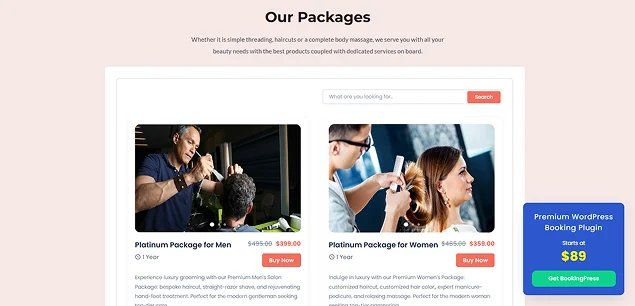
Bundle pricing is a strategy where businesses sell multiple services together for a combined prince, mostly offering a discount on the total price.
Most service businesses sell one session at a time because it feels simple. But it also creates a hidden risks like
- Constant chasing of next booking.
- Unpredictable revenue.
- And no good reason for customers to come back.
That’s the limitation of one off pricing.
However, no worries as BookingPress lets you move beyond this by offering service packages. Using the Service Package addon, you can bundle multiple sessions or services into one offer and give customers a better overall deal.
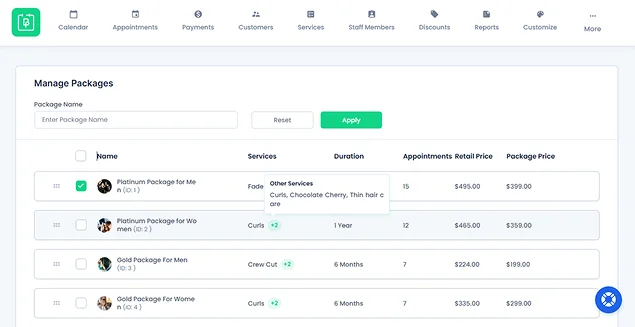
Furthermore, by bundling multiple services into packages, you sell a complete experience to your customers.
With BookingPress, you can:
- Offer 3, 5 or 10 sessions as a package.
- Add a discount at the total price.
- Set validity periods for each package.
Customers can buy the package right away from your WordPress site and book sessions from it without any extra steps.
5. Coupon Based Promotional Pricing Strategy
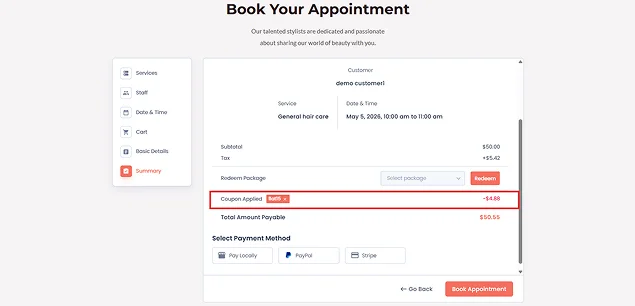
We have seen many service businesses use coupons as a quick way to get more bookings.
Create a code. Share it. Done.
But over time, this creates a problem.
Customers start expecting discounts. Your pricing loses value. And your margins slowly shrink. And that’s exactly why coupon based pricing needs a more controlled approach.
Best of all, BookingPress allows you to create fixed or percentage-based discount codes and control how, when and where they’re used.
You can:
- Run limited time offers during slow periods.
- Restrict how many times a coupon can be used.
- Create special promotions for new or returning customers.
- Offer discounts only on selected services.
Moreover, customers only get discounts when they meet certain conditions or use valid codes. Everyone else pays your standard pricing. This makes your promotions feel intentional, not random.
At the same time, it helps you create urgency. A limited time coupon or restricted offer encourages customers to book faster instead of delaying the decision.
If you’re using coupons without any limits, you’re likely giving away more revenue than necessary. That’s why BookingPress lets you structure your promotions in a way that drives bookings without hurting your pricing.
Used correctly, coupons don’t lower your revenue. They control when and how you offer discounts while keeping your pricing strategy intact.
How to Choose the Right Pricing Strategy
Now choosing the right pricing strategy for an online booking system is not about sticking to one strategy for everything.
That doesn’t work.
High performing businesses combine strategies based on goals that fit their business model, demand pattern and growth stage.
Here’s a simple way to decide:
| If Your Situation Is… | Use This Strategy | Why It Works | BookingPress Feature |
| You have empty time slots during certain hours. | Dynamic Time Based Pricing | Fills low-demand slots without lowering overall pricing. | Happy Hours Pricing |
| Your peak hours get fully booked quickly. | Dynamic Time Based Pricing | Lets you charge more when demand is high. | Happy Hours Pricing |
| Customers book short sessions but you want higher value bookings. | Tiered Duration Pricing | Encourages longer bookings and increases average order value. | Custom Service Duration |
| You want customers to spend more per booking. | Conditional Discounts | Rewards higher spend or multiple bookings. | Advanced Discount |
| You struggle with repeat bookings. | Service Bundling | Locks in multiple sessions and improves retention. | Service Package |
| You want to run limited time offers or campaigns. | Coupon Based Pricing | Creates urgency and targeted promotions. | Coupons |
| You want more predictable revenue. | Service Bundling | Secures upfront payments and future bookings. | Service Package |
| You’re overusing discounts and losing margin. | Conditional Discounts | Applies discounts only when conditions are met. | Advanced Discount |
Final Takeaway: Your Booking System Should Think Like a Revenue Engine
Think of your booking system not just as a digital calendar that takes up space, but as a silent salesperson working 24/7 to boost your bank account.
If your online booking system is not actively helping you make more money, it’s just an expense.
After all, you’re already putting effort into delivering great services so your pricing should support that, not limit it.
With the right pricing strategies and BookingPress in place, you fill more slots, sell higher value services and create a smoother experience for your customers.
Related articles:
 14-day money-back guarantee